The best portable projectors balance easy transport with a setup that fits your room and devices. These two options take different approaches: a rechargeable, palm-sized pico projector for compact carry and a short-throw Full HD laser projector for a more fixed home setup.
Quick Top Products
Kodak Ultra Mini Portable Projector
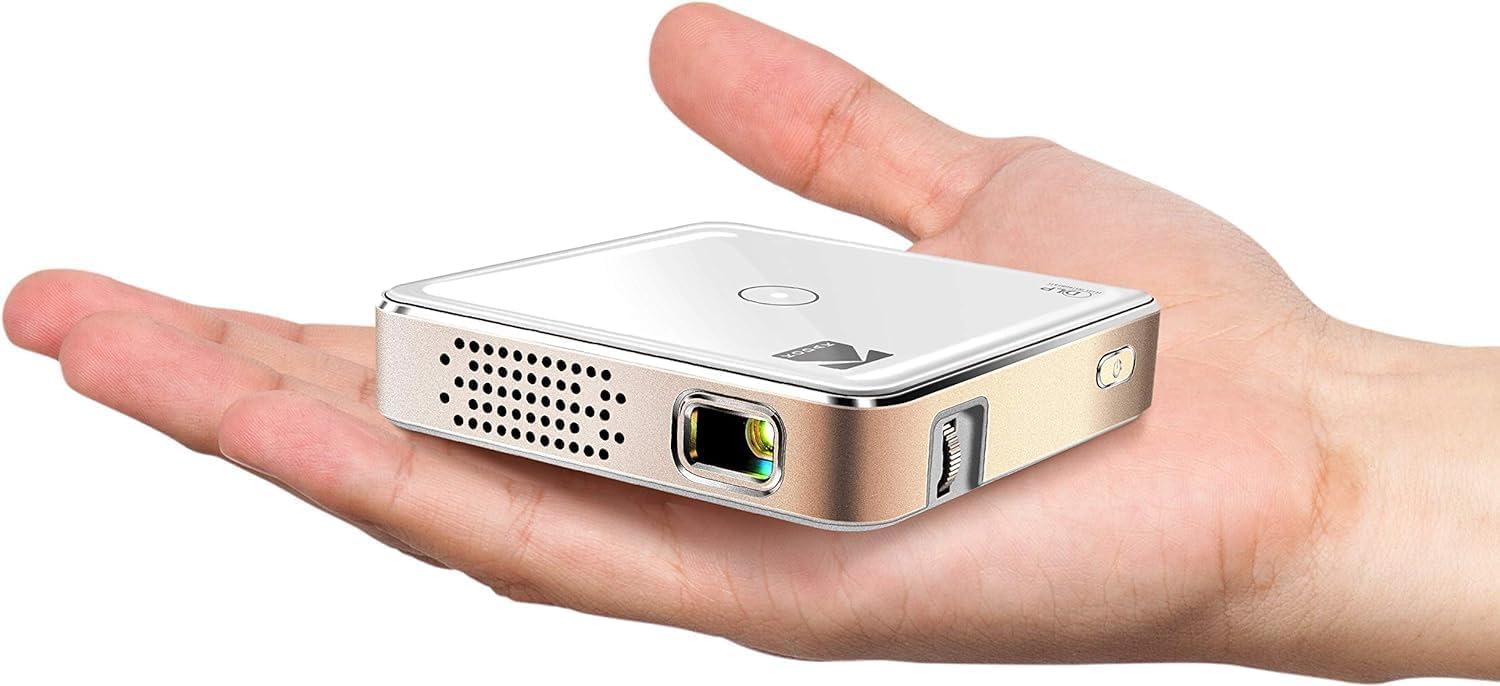
- Palm-sized DLP design with rechargeable power
- Supports 1080p input and displays images up to 100 inches
- Built-in speaker, HDMI, USB, MicroSD, and 3.5 mm input
Best For: People who want a compact projector for travel, presentations, or casual viewing in dim rooms.

Optoma GT2000HDR
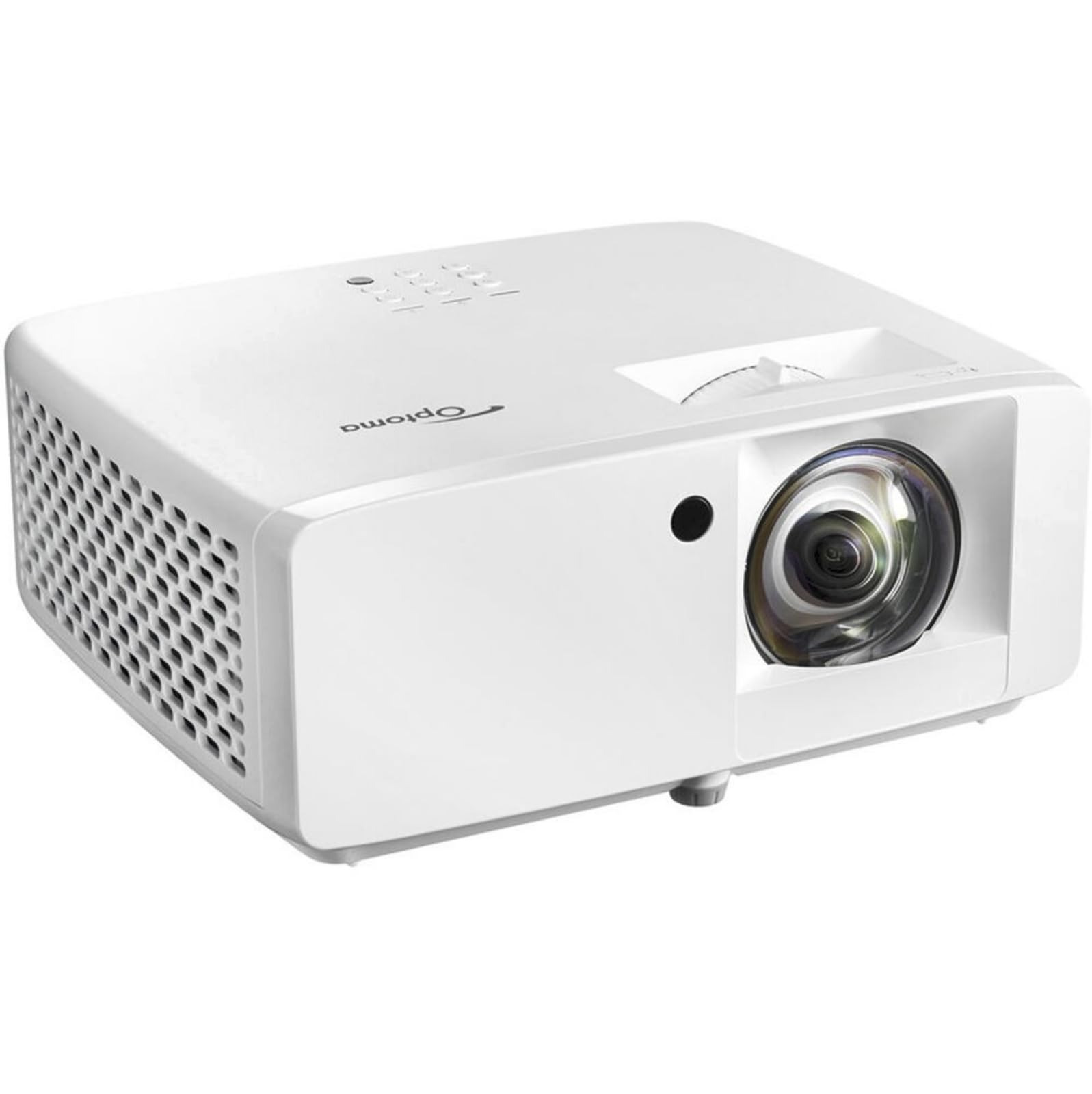
- Ultra-compact short-throw design
- Full HD 1080p resolution with a 3,500-lumen specification
- Laser projector with external power supply
Best For: Home viewers seeking a compact short-throw Full HD laser projector with a bright-room-oriented specification.
Palm-Sized Pico Projector
Kodak Ultra Mini Portable Projector - HD 1080p Support LED DLP Rechargeable Pico - 100 Display Built-in Speaker - HDMI USB and Micro SD - Compatible with iPhone iPad Android Phones"
The Kodak Ultra Mini is a palm-sized DLP pico projector with a rechargeable design, built-in speaker, and connections for HDMI, USB, and MicroSD. Its compact size makes it easier to carry in a handbag or briefcase than a home-focused projector.
It supports 1080p input and can display up to a 100-inch image, though the picture is best suited to dark or dim rooms. The built-in media player and speaker allow simple playback, while HDMI makes it possible to connect compatible phones, computers, consoles, and video players.
Check your device’s HDMI compatibility and whether the room can be darkened before choosing it.
Best For: People who want a compact projector for travel, presentations, or casual viewing in dim rooms.
| Pros | Cons |
|---|---|
|
|
Choose the Kodak when easy carrying matters more than a room-filling setup. Its palm-sized body, rechargeable design, and built-in speaker bring the basic parts of a portable viewing kit together.
The tradeoff is room brightness: its best performance is in dark or dim conditions, so it is a less fitting choice for daytime presentations in a bright space. Before buying, confirm your device supports HDMI output and consider whether the built-in connections match your usual media sources.
Compact Short-Throw Home Projector
Optoma GT2000HDR Ultra-Compact Short Throw Full HD Home Laser Projector
The Optoma GT2000HDR is an ultra-compact short-throw projector with Full HD 1080p resolution and a laser light source. Its 3,500-lumen specification and short-throw format make it a distinct option for home viewing where projector placement and room brightness are part of the decision.
The design is described as eco-friendly and uses an external power supply. Compared with a palm-sized pico model, this is a home-oriented projector rather than a rechargeable carry-along device.
Check the throw distance and available placement in your room, and confirm that its connections suit the sources you want to use before choosing it.
Best For: Home viewers seeking a compact short-throw Full HD laser projector with a bright-room-oriented specification.
| Pros | Cons |
|---|---|
|
|
Consider the GT2000HDR when you want a compact home projector and short-throw placement is useful for your room. Its Full HD resolution and 3,500-lumen specification distinguish it from the pocketable Kodak, while the external power supply points to a setup near an outlet.
The important tradeoff is portability: it is compact, but it is not described as rechargeable. Check the exact throw distance, input connections, and mounting or placement options against your room before purchase.
How to Choose Portable Projectors
How We Picked Portable Projectors
The useful distinction in this selection is how each projector fits into a real setup. The Kodak Ultra Mini is a rechargeable, palm-sized pico model with built-in audio and several media connections.
The Optoma GT2000HDR is an ultra-compact short-throw home projector with Full HD resolution and a 3,500-lumen specification.
That makes portability more than a question of body size. Consider whether you need a projector that travels in a bag, a home unit that can sit closer to the screen, or a balance of those uses.
The light source, power arrangement, input options, and room lighting all affect how practical a portable projector will be for your plans.
Comparing These Portable Projectors
The Kodak is the more travel-oriented choice: it is palm-sized, rechargeable, and includes a speaker, media player, HDMI, USB, and MicroSD. Its image can reach up to 100 inches, but its best performance is in a dark or dim room.
This makes it a better fit for compact carry and occasional viewing where you can manage ambient light.
The Optoma takes a home-oriented approach. It has a short-throw format, Full HD 1080p resolution, a laser light source, and a 3,500-lumen specification.
It uses an external power supply, so plan for a nearby outlet. Compare its throw distance and room placement with your available screen area before treating the short-throw design as a fit.
| Product | Standout features | Best for |
|---|---|---|
| Kodak Ultra Mini Portable ProjectorCheck Price |
| People who want a compact projector for travel, presentations, or casual viewing in dim rooms. |
| Optoma GT2000HDRCheck Price |
| Home viewers seeking a compact short-throw Full HD laser projector with a bright-room-oriented specification. |
Choosing a Portable Projector for Your Room
Room brightness and screen distance are practical starting points. For a bedroom or travel setup that can be darkened, the Kodak's compact design and rechargeable power may be convenient.
For a living room or another home space where you want short-throw placement, check whether the Optoma's required distance works with your screen and furniture layout.
A projector’s stated brightness figure is only one part of the decision. Match the intended room and time of day to the model’s documented use details, and avoid assuming that compact size alone means easy setup.
Confirm the available power source, surface or mounting position, and distance to the viewing area before buying.
Check Connections, Power, and Media Sources
Think through what you will connect. The Kodak includes HDMI, USB, MicroSD, and a 3.5 mm input, plus a built-in media player and speaker.
If you plan to connect a phone or tablet, verify that the device supports HDMI output and identify any adapter you may need.
The Optoma's product details here identify the projector type, resolution, brightness specification, and external power supply, but do not give connection specifics. Check its available inputs against your streaming device, computer, console, or other source.
For either model, account for sound: the Kodak has a built-in speaker, while the Optoma’s audio details should be confirmed for your intended setup.
Who Should Choose Which Portable Projector?
Pick the Kodak Ultra Mini if you value a palm-sized rechargeable projector, built-in audio, and multiple listed media connections, and you can use it in a dim room. Its compact carry profile is the central advantage for travel or occasional small-space viewing.
Choose the Optoma GT2000HDR if your priority is a compact home projector with short-throw design and Full HD resolution. Check placement distance, input compatibility, and outlet access before buying.
The deciding tradeoff is straightforward: the Kodak emphasizes carry and rechargeable use, while the Optoma emphasizes a short-throw home setup.